Human-computer interaction has lived on flat surfaces for decades. From bulky cathode-ray monitors to pocket-sized smartphones, digital information has remained trapped behind rectangular glass boundaries. Spatial computing changes this relationship entirely by turning physical environments into interactive digital workspaces. By blending virtual assets, sensor networks, computer vision, and real-time processing, spatial computing removes the screen as the primary bottleneck between humans and data.
Understanding spatial computing requires looking beyond simple entertainment headsets. This shift represents an architectural transformation across operating systems, software design, industrial workflows, and everyday communication.
Defining Spatial Computing
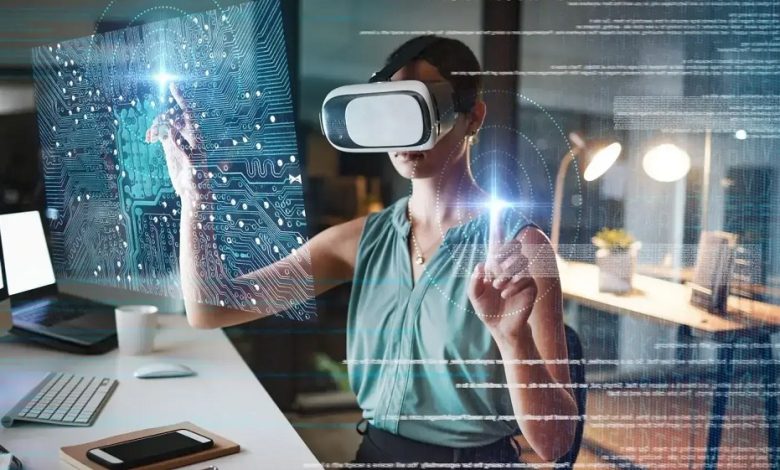
Spatial computing refers to the convergence of hardware, software, and sensor architectures that allow machines to perceive, map, and interact with three-dimensional physical space in real time. Unlike traditional virtual reality that isolates users from reality, or basic augmented reality that projects flat overlays onto a camera feed, spatial computing treats physical surroundings as an active, queryable canvas.
The core technology stack relies on several foundational pillars:
-
Simultaneous Localization and Mapping: Advanced sensor suites continuously scan environments to track user orientation and construct dynamic geometric models of rooms and objects.
-
Computer Vision and Spatial Sensors: Infrared emitters, time-of-flight sensors, LiDAR units, and high-resolution pass-through cameras capture depth, light, and surface contours.
-
Contextual Spatial Audio: Sound waves are mapped to virtual coordinate points, adjusting dynamically in volume and reflection depending on room materials and listener movement.
-
Multimodal Input Systems: High-precision eye tracking, natural hand gestures, low-latency micro-gestures, and voice inputs replace mechanical mice and keyboards.
The Limitation of Traditional Flat Interfaces
Traditional displays present inherent compromises. They require users to translate multi-dimensional concepts into two-dimensional windows, tabs, and folders. This translation taxes human cognition and creates distinct physical limitations:
-
Fixed Display Real Estate: Users remain restricted by physical monitor dimensions, requiring multiple hardware screens to expand digital workspace.
-
Context Switching Friction: Navigating across dozens of stacked application windows disrupts task continuity and increases cognitive fatigue.
-
Detached Input Ergonomics: Mice, touchpads, and keyboards force users into static postures, separating direct physical manipulation from visual feedback.
-
Isolation of Data from Environment: Information about a machine, medical patient, or architectural site remains locked on an external screen rather than mapped directly onto the physical subject.
Spatial computing eliminates these barriers by anchoring applications, data visualizations, and communication channels directly to coordinates in space.
Transforming Key Industries
Spatial computing is accelerating workflows across high-consequence industries where spatial understanding is critical.
Healthcare and Advanced Medicine
Medical professionals require spatial awareness during surgical operations, diagnostic imaging, and clinical training. Flat scans force surgeons to mentally construct 3D representations of patient anatomy.
-
Surgical Navigation: Surgeons overlay dynamic 3D reconstructions of patient tomography directly onto the surgical site during procedures, improving precision during tumor resections or spinal placements.
-
Collaborative Diagnostics: Multi-disciplinary medical teams examine complex vascular or organ models in shared virtual coordinates, viewing physiological data from every perspective.
-
Procedural Simulation: Medical students train on anatomically accurate models that simulate realistic physiological responses and procedural challenges without patient risk.
Architecture, Engineering, and Construction
Designers and engineers have long generated 3D computer-aided design files only to view them on flat screens. Spatial computing restores true scale to design reviews.
-
BIM Integration on Job Sites: Building Information Modeling data projects over active construction areas to identify plumbing clashes, structural discrepancies, and electrical conduit routing errors before installation begins.
-
Spatial Architectural Walkthroughs: Clients and architects review structural scale, daylighting conditions, and material finishes at full scale before breaking ground.
-
Real-Time Remote Collaboration: Structural engineers inspect off-site modular components alongside field teams, placing spatial markers on problematic welds or joints.
Manufacturing, Logistics, and Field Maintenance
Industrial environments demand rapid, error-free operations while keeping workers focused on physical machinery.
-
Hands-Free Assembly Guidance: Factory technicians receive contextual schematics and sequential installation steps projected directly over mechanical assemblies.
-
Digital Twins and Telemetry: Operators observe live telemetry, thermal maps, and pressure readings floating directly above factory floor machinery.
-
Remote Expert Assistance: Field technicians broadcast their exact field of view to off-site senior engineers who place persistent 3D annotations over parts requiring repair.
Redefining Knowledge Work and Digital Collaboration
Beyond industrial settings, spatial computing redefines knowledge work. Traditional remote work tools often produce communication fatigue and disjointed collaboration. Spatial computing introduces genuine spatial presence.
Instead of staring at grid-based video conferences, distributed teams interact with realistic avatars anchored around virtual tables. Participants make natural eye contact through gaze tracking, while spatial audio mimics natural acoustics by routing voices from each speaker specific physical direction.
Whiteboards, diagrams, and collaborative codebases occupy infinite virtual volume. Teams can maintain persistent workspaces where documents remain pinned to virtual walls across work sessions, eliminating setup overhead and restoring spontaneous collaboration.
Technical and Practical Bottlenecks
While the potential of spatial computing is expansive, widespread mass adoption faces significant technological hurdles:
-
Thermal and Weight Constraints: Packaging high-density silicon, custom sensor co-processors, active cooling, and optics into lightweight, all-day wearable frames remains a severe engineering challenge.
-
Battery Chemistry Limits: High-resolution micro-OLED displays and continuous sensor processing drain power quickly, requiring tethered battery packs or limiting cordless sessions to a few hours.
-
Visual Optics and Focal Accommodation: Most headsets currently suffer from vergence-accommodation conflict, where the physical eyes focus on a fixed screen distance while perceiving virtual objects at varying depths, occasionally causing eye strain.
-
Software Ecosystem and Developer Tooling: Developing intuitive spatial interactions requires rewriting interface guidelines, interaction models, and graphics engines from the ground up.
Privacy, Data Governance, and Ethical Concerns
Spatial computing hardware collects vastly more intimate data than traditional computers. Operating a spatial device requires constant capture of personal living environments, precise eye-gaze tracking, and biometric movement profiles.
Gaze tracking data can reveal an individual subconscious focus, health conditions, emotional reactions, and political or consumer interests within seconds. Furthermore, continuous environmental scanning records the private interiors of homes, offices, and confidential work assets.
Protecting user privacy requires operating systems to handle sensor data entirely on-device, exposing only processed user intents to third-party developers rather than raw camera or sensor feeds. Strict regulatory standards and open data auditing must emerge to prevent spatial computing environments from turning into pervasive surveillance infrastructure.
The Future Trajectory Beyond Physical Screens
Spatial computing marks the beginning of ambient computing, where the boundary between digital information and the physical world dissolves. As optics shrink toward standard eyewear form factors and custom silicon becomes more power-efficient, interactive 3D computing will displace standard monitors in office spaces, classrooms, and design studios.
The transition will not happen overnight, but the trajectory is set. Computing is moving from a world of bounded rectangles to an open landscape of spatial context, direct manipulation, and collaborative immersion.
Frequently Asked Questions
How does spatial computing differ from the Metaverse concept?
Spatial computing focuses on the functional hardware and software mechanisms that integrate digital computing into physical 3D spaces for real-world tasks. The Metaverse refers broadly to a theoretical network of interconnected, fully virtual persistent worlds focused on social interaction and virtual economies.
What programming languages and engines are primary in spatial computing development?
Developers primarily build spatial applications using C-sharp, C-plus-plus, Swift, and JavaScript, leveraging graphics engines like Unity, Unreal Engine, or native platform frameworks such as RealityKit and OpenXR.
How does spatial computing impact physical ergonomics compared to desktop monitors?
Spatial computing allows users to arrange virtual workspaces at any height, distance, or angle, promoting natural head posture and varied physical movement rather than locking the body into a fixed seated position in front of a physical desk.
Can people with visual impairments use spatial computing devices effectively?
Spatial computing platforms incorporate dynamic text scaling, high-contrast boundary rendering, screen magnification, voice navigation, and localized spatial audio cues to help visually impaired individuals navigate virtual elements and physical environments.
What network infrastructure is necessary to support cloud-rendered spatial computing?
High-fidelity spatial computing streaming requires low-latency 5G or Wi-Fi 6E/7 connections with latency under twenty milliseconds and sustained bandwidth to prevent motion sickness caused by visual lag.
How do spatial computing devices prevent digital objects from drifting over time?
Devices use continuous visual-inertial odometry paired with environmental point-cloud caching, matching detected physical geometry with stored feature points to lock virtual coordinates securely in place.
Will traditional computer monitors become entirely obsolete?
Traditional monitors will likely persist for specialized color-critical grading, budget computing, and simple text-entry tasks, but spatial displays will increasingly replace multi-monitor setups for complex multitasking and 3D workflows.